
Sengoku Portfolio
Castles1332 – 1873Takatori, Nara Prefecture
Nothing Is Here, But Everything Is Here
Takatori Castle and the Metropolis on the Mountain
A field essay on how Takatori reveals its scale slowly, and why the absence of its buildings makes the castle stronger, not weaker.
October 2026Noah Schuster · 6 min read
- Site
- Takatori Castle
- Location
- Takatori, Nara Prefecture
- Elevation
- 583.6 m
- Type
- Early-modern mountain castle
- Status
- National Historic Site
- Field method
- On-site observation and photography
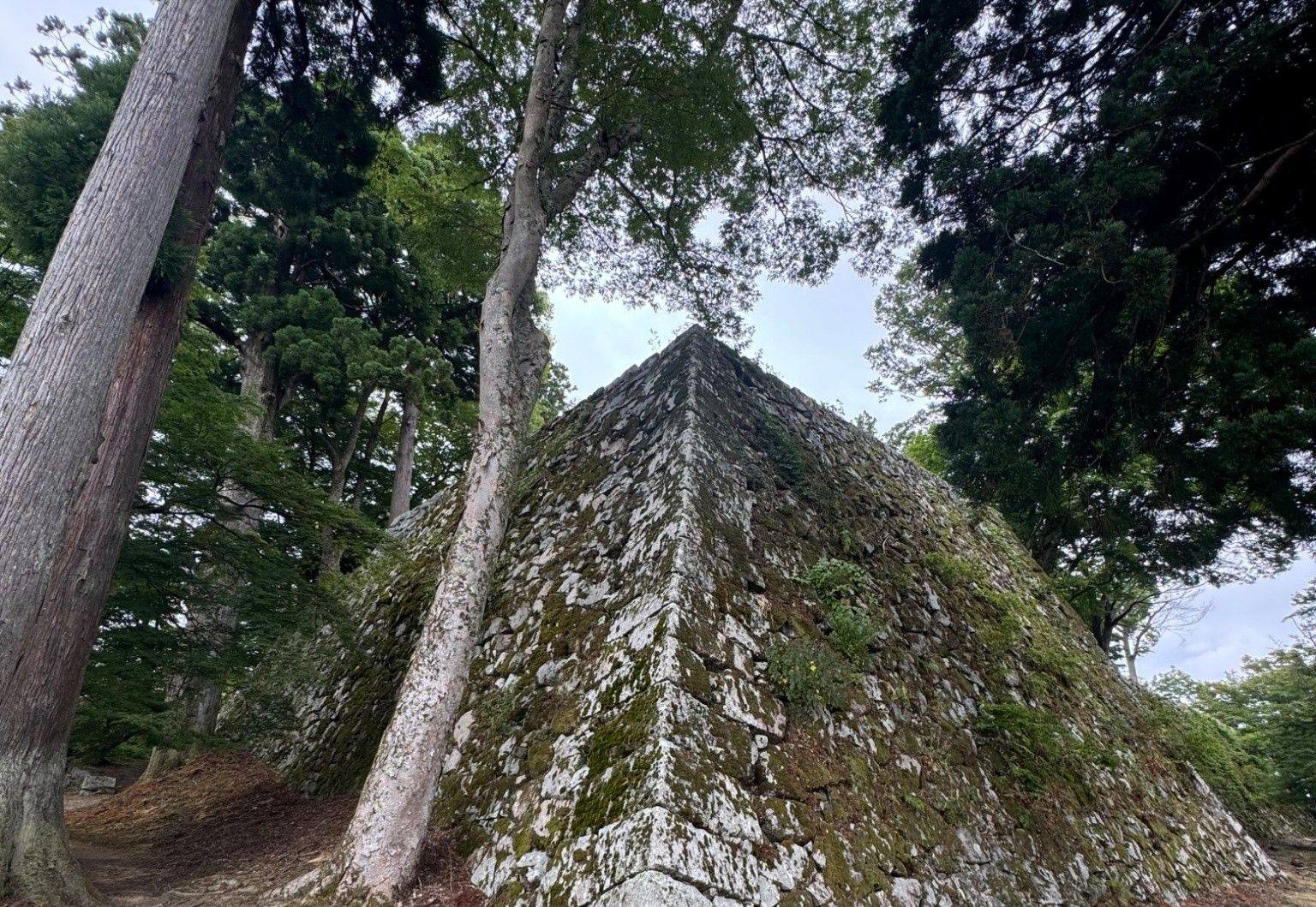
Takatori Castle is most powerful not because of what survives above its walls, but because of what no longer does. This essay combines field observation with historical context to examine how the castle reveals its scale gradually: first as fragments of moss-covered masonry, then as a sequence of gates and terraces, and finally as an overwhelming stone-built complex on the summit of Mount Takatori. The central claim is experiential as much as architectural: absence does not weaken Takatori. It makes the visitor reconstruct the castle mentally.
Nothing is here, but everything is here.
The castle reveals itself slowly
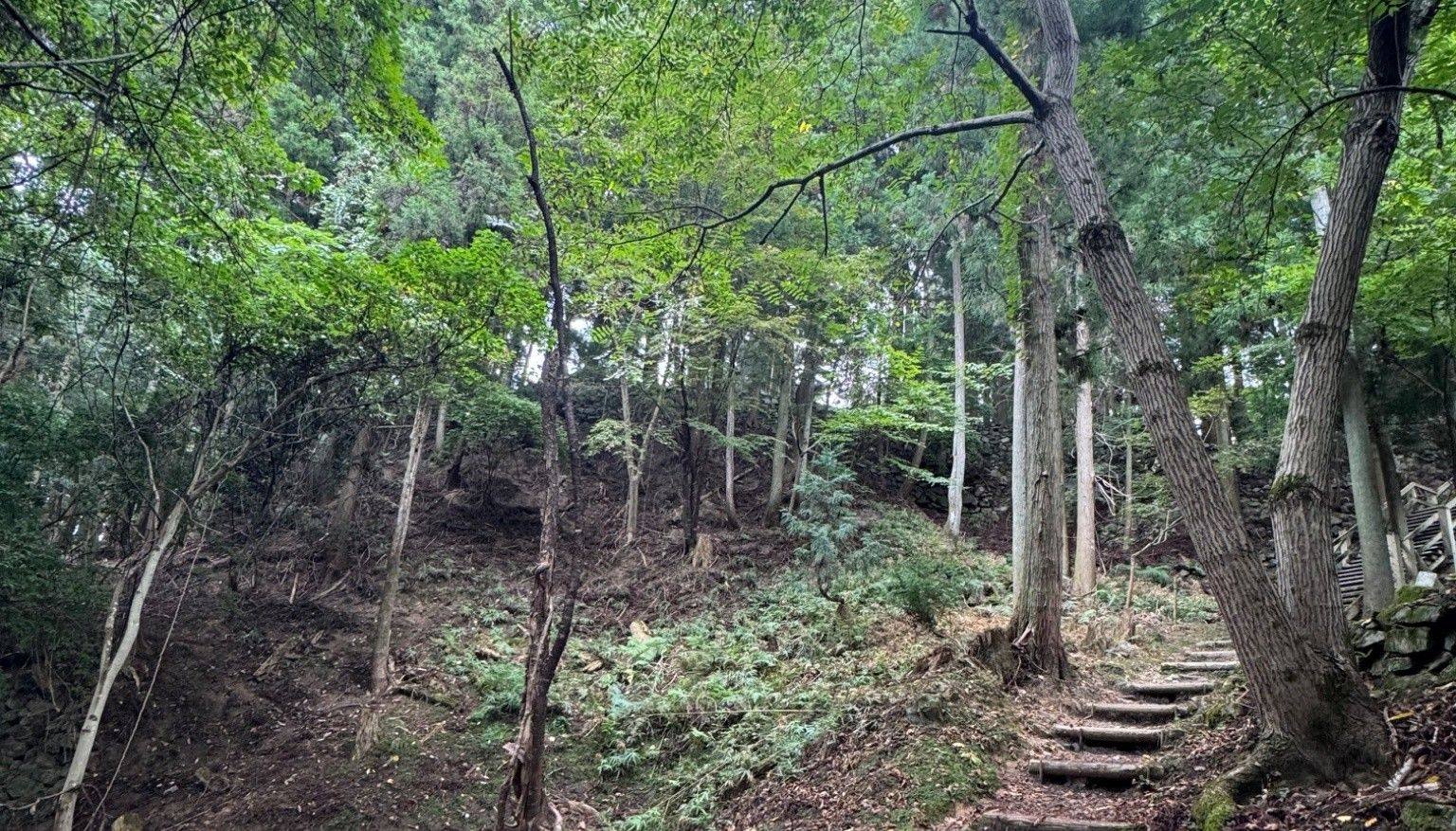
I parked near the Hachiman Shrine entrance close to the top of the mountain and began making my way upward slowly. The conditions felt almost jungle-like. Trees crowded the route, roots cut through the path, and moss seemed to be reclaiming nearly every exposed stone surface. It did not feel like the approach to a manicured tourist site. It felt like entering a mountain that had swallowed a fortress.
At first, the remains were modest. Small sections of masonry appeared beside the trail, partly hidden under vegetation. I stopped to photograph them because they were beautiful in their own right. At that point, however, Takatori still felt like many other mountain-castle ruins: evocative fragments that asked the visitor to imagine the rest.
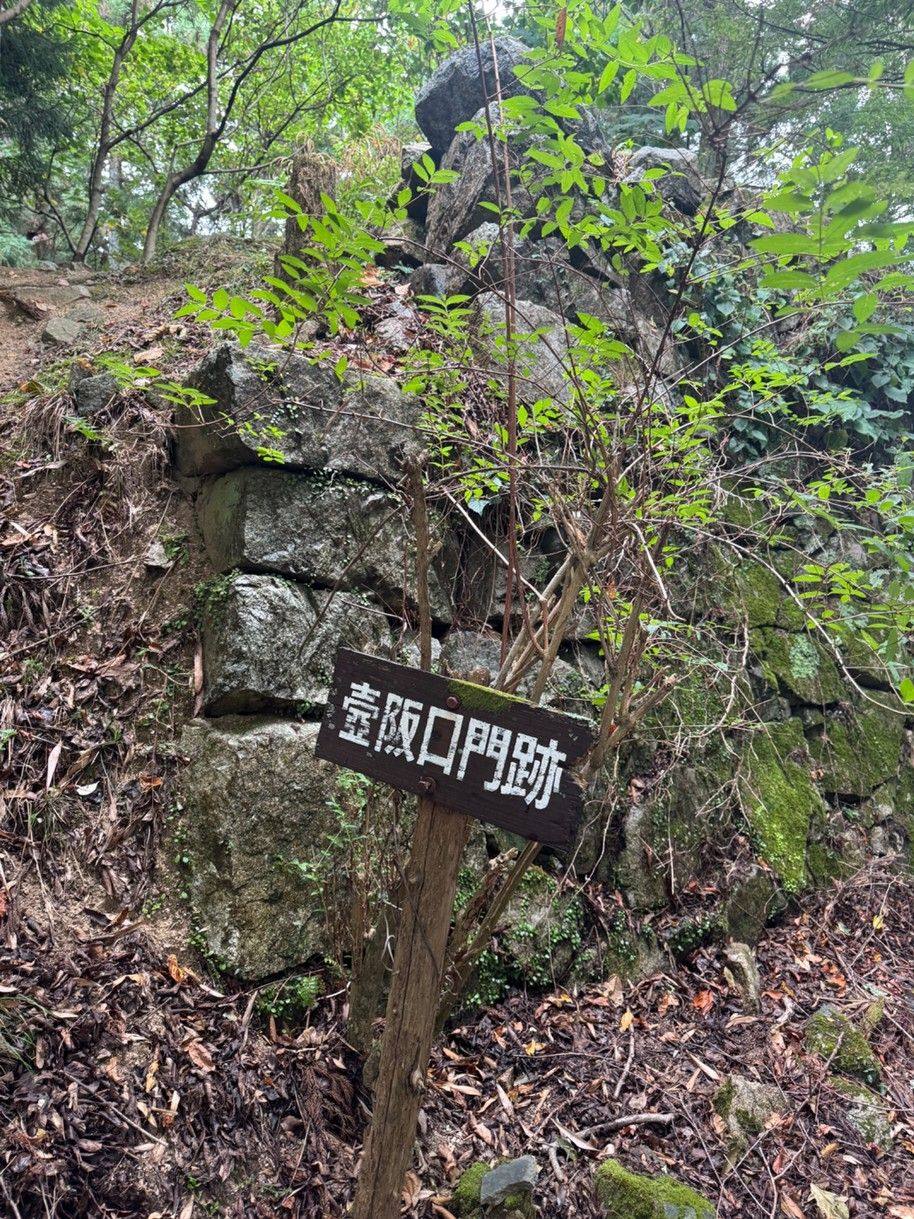
The change began around the Tsubosakaguchi gate area. The stonework grew larger, more continuous, and more obviously architectural. The sensation shifted from discovering isolated ruins to moving through a designed defensive landscape. Takatori did not reveal its scale in a single dramatic view; it escalated.
That progression is historically appropriate. Takatori began as a medieval mountain stronghold associated with the Ochi clan in the fourteenth century. Its later form was dramatically expanded in the late sixteenth century under the Toyotomi regime, particularly after Toyotomi Hidenaga took control of Yamato and his retainers developed Takatori into a major early-modern fortress. 1
From mountain stronghold to stone fortress
The contrast between Takatori's origins and its surviving remains is central to understanding the site. Takatori Town traces the castle to 1332, when the Ochi family established a defensive position on Mount Takatori. The medieval phase relied heavily on terrain, earthen enclosures, and ridge-based defenses rather than permanent monumental buildings. 2
The castle's later transformation was tied to the political consolidation of Yamato. In 1585, Toyotomi Hidenaga became lord of Yamato, and Takatori was developed under his retainers as a major subsidiary fortress connected to Koriyama Castle. The result was not simply a fortified summit. The castle expanded across the mountainside into an extensive network of enclosures, gates, residences, stone walls, and defensive routes. 1
During the Edo period, the Uemura family held Takatori from 1640 through the end of the domain system. As prolonged peace made daily residence on the mountaintop impractical, political and residential functions increasingly shifted toward the castle town below, while the mountain fortress remained intact as the domain's defensive core. 2
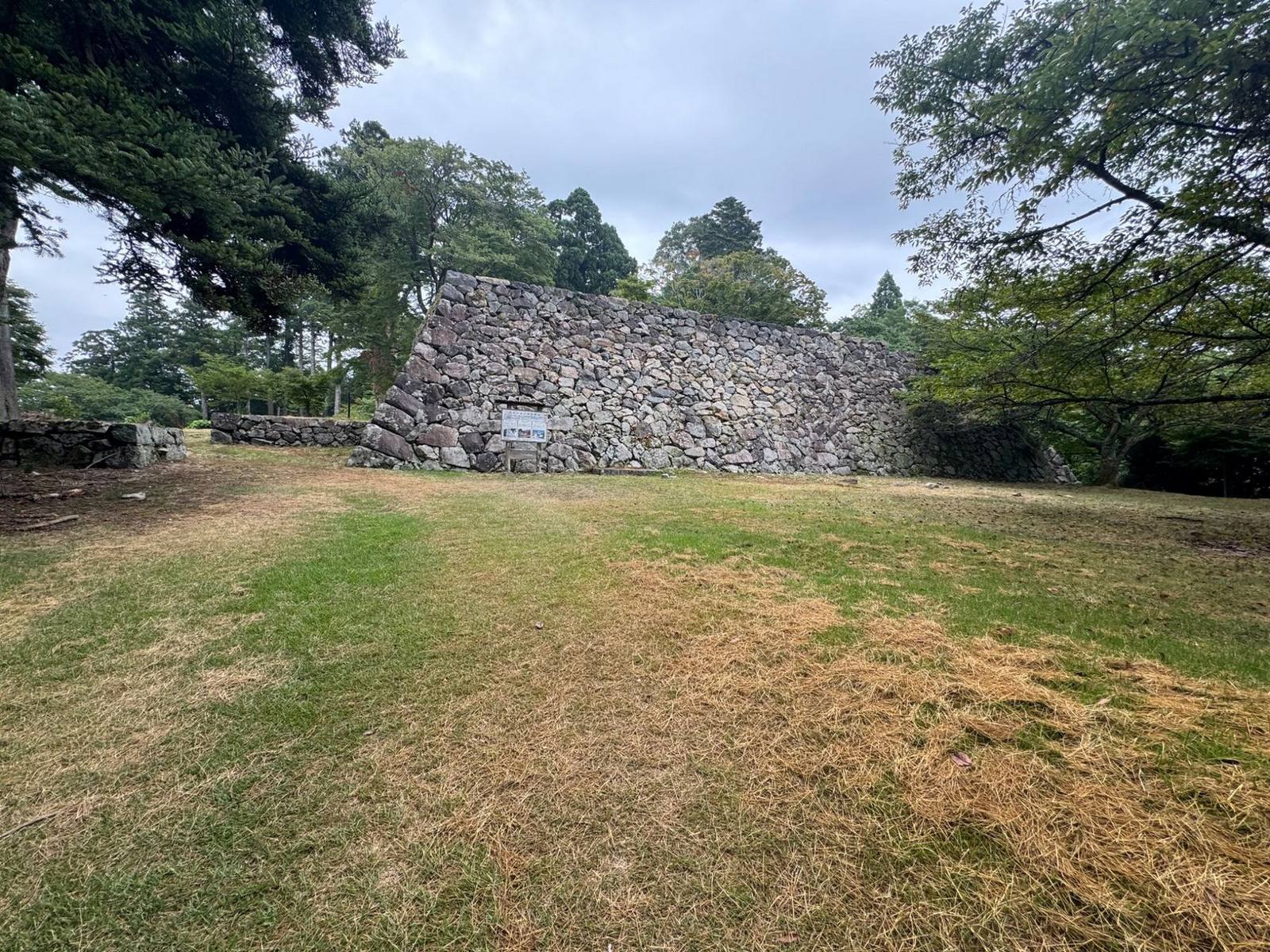
Modern official descriptions place the castle at 583.6 meters above sea level, with a perimeter of roughly three kilometers. Takatori Town reports a height difference of approximately 446 meters between the castle town and the summit complex, the greatest such elevation difference among early-modern Japanese castles. 1 The physical experience of the site makes those numbers believable: the terrain is not a backdrop to the castle; it is part of the castle's architecture.
A metropolis on the mountain
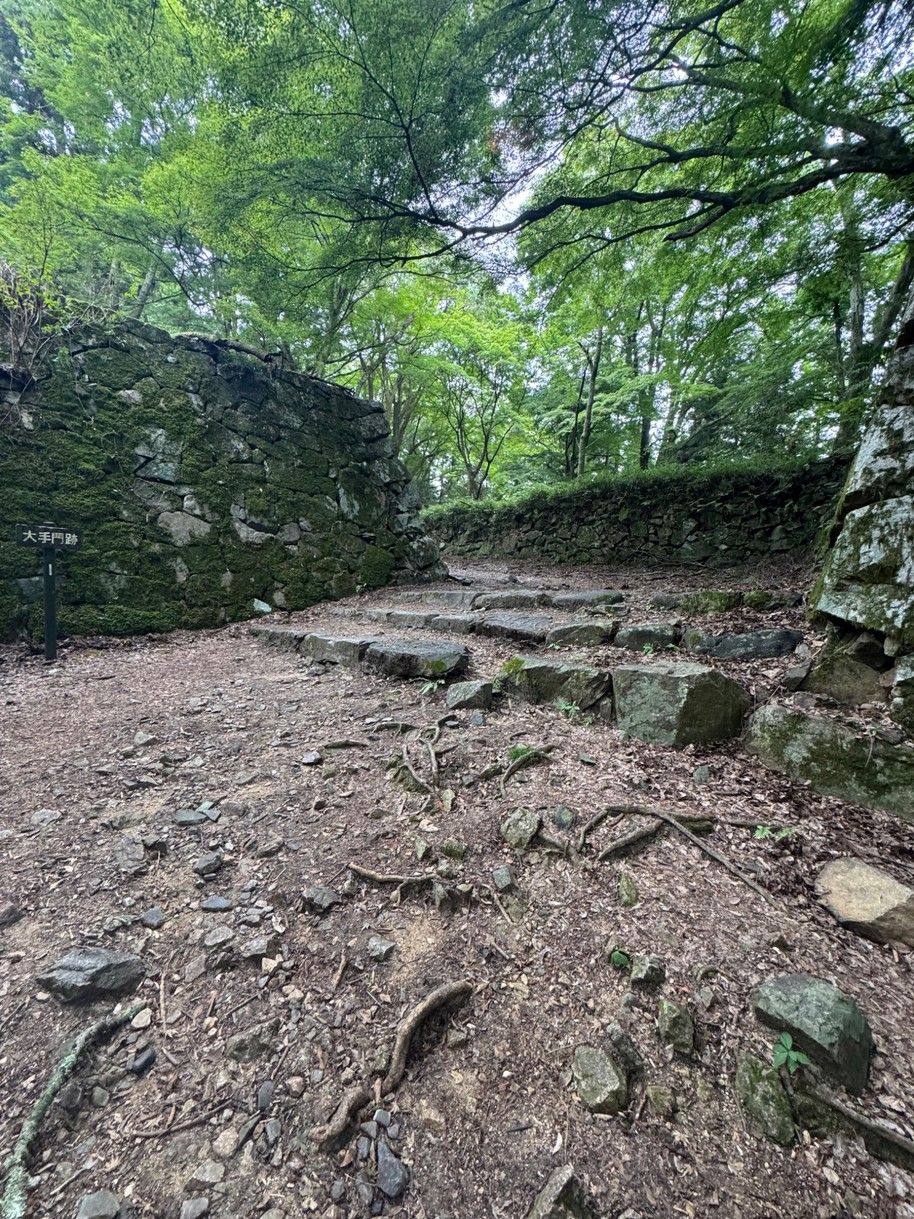
The decisive moment came after Otemon, when the upper castle opened in front of me and the Honmaru and former tenshu area came into view. The walls were not simply impressive from a distance. They were immediate. They rose directly beside the route and filled my field of vision. Their height changed the scale of the entire mountain.
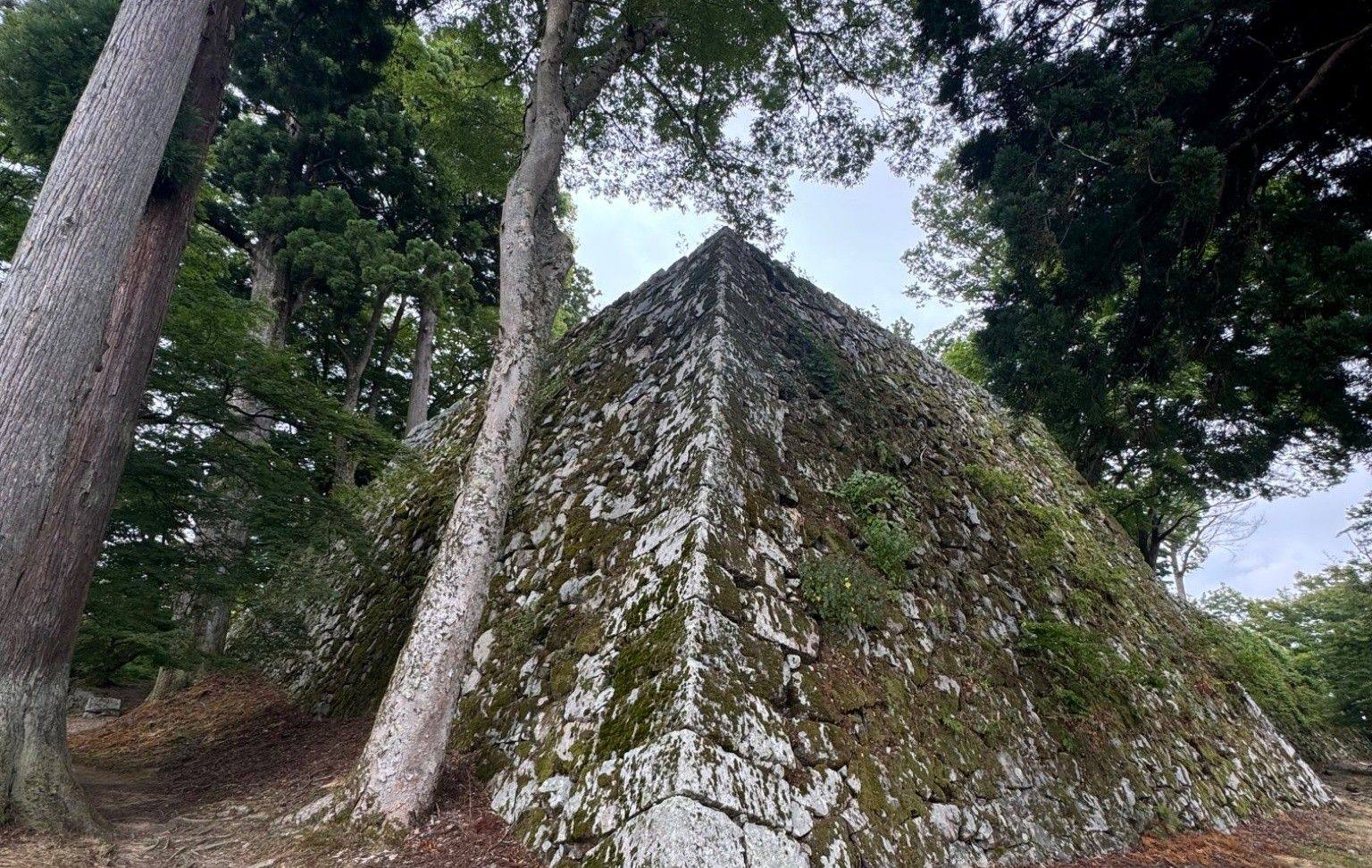
It was like a metropolis up there.
Field reaction
That was the thought that kept returning. I had expected a mountain castle. What I found felt closer to the ruins of an urban complex: terrace after terrace, walls above walls, gate approaches, foundations, passages, and level ground created where level ground should barely exist.
The word ‘metropolis’ is obviously emotional rather than literal, but it captures the architectural impression. The surviving stonework communicates organization, population, movement, hierarchy, and controlled access. It also forces the visitor to imagine the labor needed to transport, shape, and assemble such a quantity of stone at elevation.
Takatori Town's site guide identifies the tenshu platform wall as the tallest within the castle, at roughly twelve meters. 3 A twelve-meter wall is substantial anywhere. Encountering it on top of a mountain makes the engineering feel almost excessive: a deliberate statement of authority built into terrain already difficult to attack.
Nothing is here, but everything is here
I explored as much of the Honmaru as I could and climbed onto the former tenshu platform itself. I took photographs and video, trying to understand how the upper enclosures related to one another. At the symbolic center of what had once been an enormous fortress, I also noticed deer droppings. It was a small, funny detail, but it captured something important: the castle had returned to the mountain without disappearing from it.
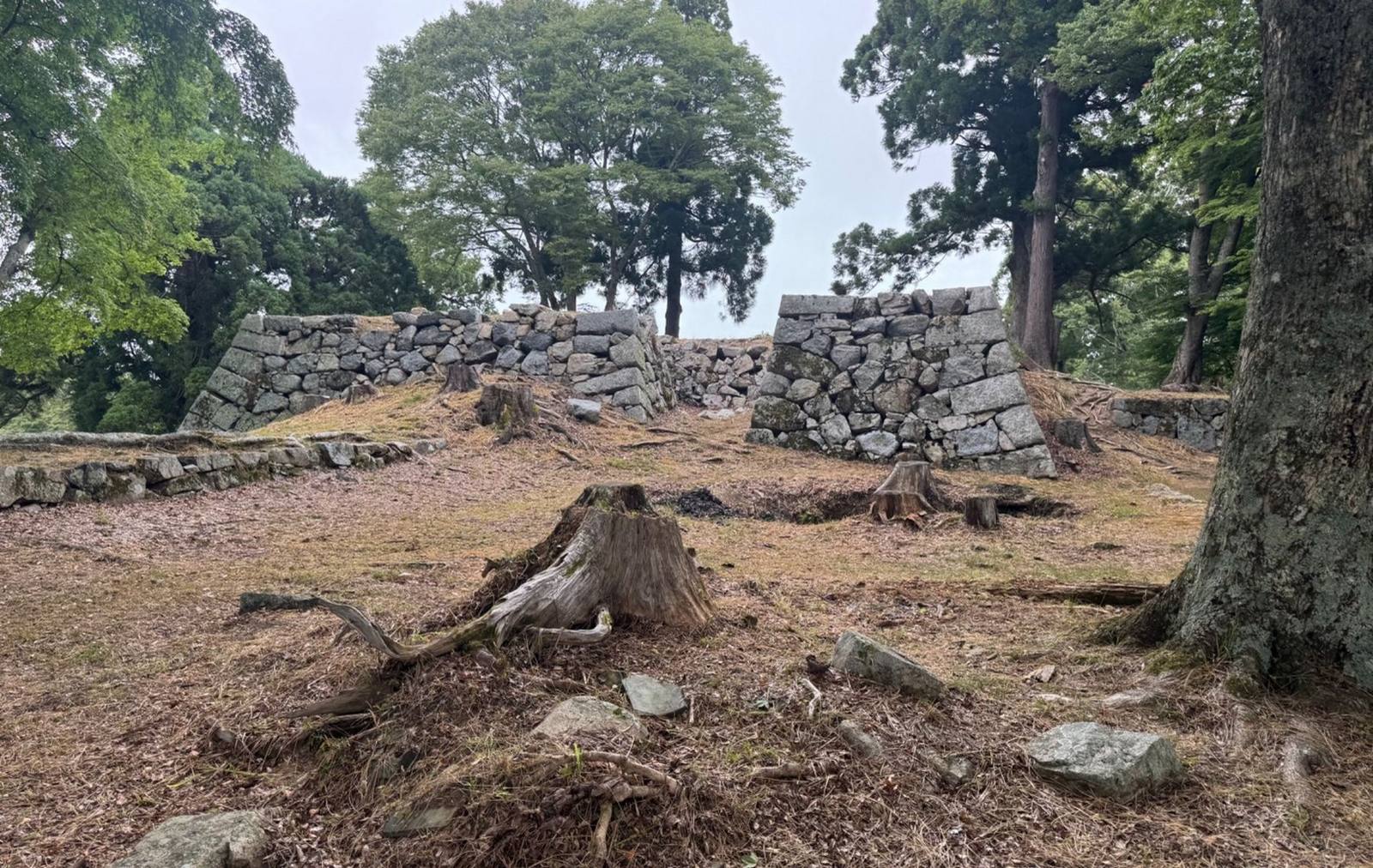
There was no rain by then. I called my wife and showed her the castle over the phone. Even through a screen, her reaction centered on the same thing that had overwhelmed me: its size.
This is where Takatori's absence becomes productive. A reconstruction tells a visitor what to see. Takatori makes the visitor supply the missing architecture. Every foundation suggests a building. Every gate opening suggests controlled movement. Every empty terrace raises the question of what once occupied it. The castle begins rebuilding itself inside the imagination.
The surviving ruins also preserve unusually complete evidence of the castle's overall plan. The national cultural-property designation notes that although the buildings are gone, the tenshu platform, gates, turret sites, entrances, enclosures, and extensive stone walls retain much of the former layout. This preservation is a major reason Takatori was designated a National Historic Site on 31 March 1953. 4
That is the meaning behind the sentence that stayed with me after the visit: nothing is here, but everything is here. Takatori's buildings have vanished, yet the site does not feel empty. The walls and spaces still direct the body through the castle, and that movement supplies an understanding that a photograph of a reconstructed keep cannot provide on its own.
Leaving the post
The strangest part of the visit came when I finally began walking back down. I did not feel as though I was simply leaving another castle ruin. I felt as though I was abandoning a post I was supposed to guard.
The feeling was irrational, but it was immediate. After tracing the walls and climbing through the upper enclosures, leaving felt unfinished. I kept thinking about the routes I had not followed carefully enough, the walls I had not examined closely, and the defensive relationships I still did not understand.

I wanted to return not just to see Takatori again, but to study it: to walk the structure methodically, understand why each enclosure sits where it does, examine how the gates controlled movement, and reconstruct the logic of the fortress from the ground itself.
Conclusion
Takatori changed how I think about castle ruins. I have visited castles where the tenshu still stands, walked through reconstructed palaces, and climbed restored towers. Those sites provide an immediate architectural spectacle. Takatori offers something different: it makes absence itself part of the interpretation.
The castle's history explains the scale: a medieval mountain stronghold transformed into a major early-modern fortress, maintained through the Edo period and dismantled after the fall of the domain system. Its preservation explains why the site remains readable today. But neither point fully explains the emotional force of walking through it.
That comes from the sequence: forest, fragments, gates, rising stonework, and finally the Honmaru. Takatori withholds its scale until the visitor is already inside it.
I climbed into the forest expecting ruins and found the remains of a metropolis. Then I walked back down the mountain feeling as though I had abandoned my post.
Nothing is here. But everything is here.
Sources and notes
Historical claims in this essay are drawn primarily from Takatori Town and the Japanese Agency for Cultural Affairs. Field observations, photographs, and interpretive reactions are the author's own. All photographs were taken by Noah Schuster during the field visit; no external photographs are reproduced. The method is intentionally hybrid: first-person field observation, visual documentation, and official historical sources, used to show how surviving architecture, terrain, and visitor movement can interpret a castle whose superstructures no longer survive.
- 1Takatori Town. “Takatori Castle – Places associated with Toyotomi Hidenaga.” Updated 24 October 2025. Official English overview. Link
- 2Takatori Town. “Takatori Castle Ruins (高取城跡).” 14 January 2019. Official history of the castle's medieval origins, Toyotomi-period expansion, Uemura rule, and dismantling. Link
- 3Takatori Town. “Takatori Castle Layout and Highlights (高取城の縄張と見どころ).” Official castle guide, identifying the main keep platform as the highest stone wall in the castle, approximately 12 m. Link
- 4Agency for Cultural Affairs, Japan. “Takatori Castle Ruins (高取城跡).” Nationally Designated Cultural Properties Database. National Historic Site designation dated 31 March 1953. Link
- 5Nara Prefecture. “Preservation and Utilization Plan for the Historic Site Takatori Castle Ruins.” Documents the survival of stone walls, wells, water defenses, the approach route, and the site's importance as an early-modern mountain castle. Link
Next in the Journal
Battlefields1560
Reading OkehazamaTesting a Famous Battle Against the Ground
The first time I visited Okehazama, I went looking for the place where Imagawa Yoshimoto died. The second time, I went looking for a battle.
11 min read